

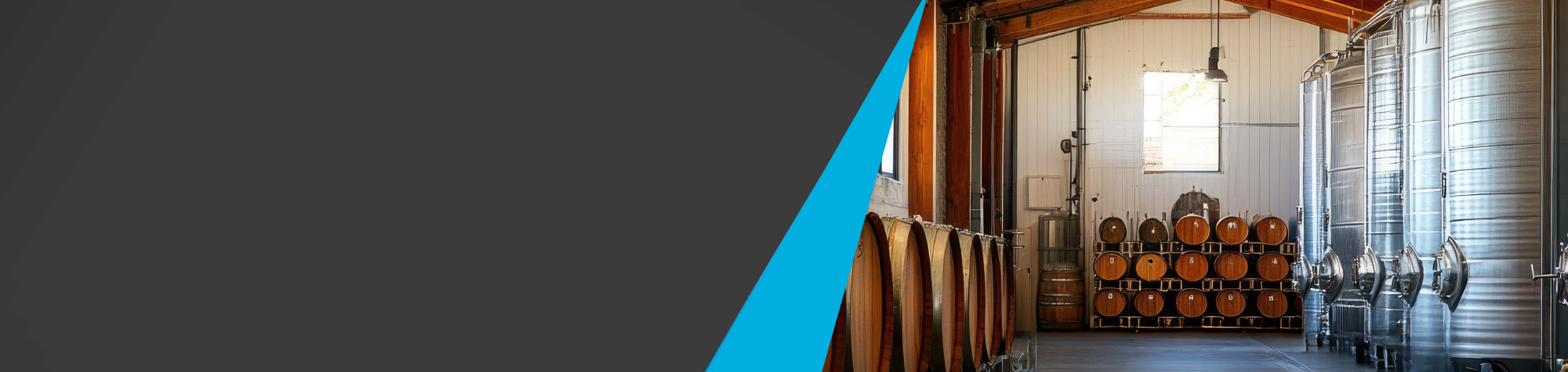
Winery cooling failure during harvest doesn’t announce itself. A glycol pump trips at 3pm on a 38°C day. The tanks are full. The cellar team starts pulling fault codes while fermentation keeps running in every tank that was already at temperature. The repair estimate comes back at two to three days, parts not local. What happens in the next two to four hours is what determines whether the vintage is salvageable — not the repair timeline.
The first hour of winery cooling failure
Fermentation tanks heat up faster than most winemakers expect once cooling stops. In warm ambient conditions during harvest, temperatures inside a tank can climb several degrees within 60 minutes — past the set point range before the fault has even been diagnosed.
The first hour of a cooling failure is rarely spent making good decisions. Staff get pulled off harvest tasks. Contractors are hard to reach during crush. When a repair crew does arrive, the parts may not be on the truck. Two to three days is a realistic repair timeline for most glycol system failures during harvest. The ferment doesn’t pause for any of it.
At that point the options are straightforward. Get a hire chiller on site within hours, or accept that some of what’s in tank will be damaged. Which outcome happens depends almost entirely on what was arranged before the failure occurred.
What it costs when cooling fails
When fermentation runs hot the volatile aromatics go first — the fruit compounds and floral notes that define what a wine tastes like at bottling. They leave with the heat and don’t come back. No addition at a later stage recovers what was lost during fermentation.
Above roughly 35°C yeast activity slows and can stop. A stuck ferment mid-crush means residual sugar sitting in a warm tank — the exact conditions Brettanomyces and acetic acid bacteria need. A tank that was tracking clean can shift to barnyard or vinegar characteristics inside 24 to 48 hours without temperature control.
For a winery running several tanks through crush at the same time, a two-day failure without backup cooling doesn’t just affect one batch. It can set the commercial tone for the entire vintage — not only in the product that gets written off, but in what the label represents to buyers who’ve been drinking it for years.
What a backup plan actually requires
Three things need to be sorted before crush starts. None of them work if they’re being figured out during a breakdown.
Who to call and what they can move
Searching for emergency chiller options during a failure burns time the ferment doesn’t have. Aircon Rentals runs 24/7 from depots in Sydney, Melbourne, Brisbane, and Perth. One call moves the right equipment — sized to the glycol system, pre-tested at the depot, dispatched with the pumps, hoses, and cabling needed to connect on arrival. The emergency chiller hire winery case study shows what that response looks like at a west NSW winery that called during active crush with fruit already in tank.
Where the equipment goes
Knowing in advance where a hire chiller positions on site, how the delivery truck gets in, and where the glycol supply and return connection points are cuts hours off the installation. A site that’s been walked before vintage — access routes, electrical supply, hose run distances — gets set up in hours. One that hasn’t gets set up in the better part of a day, and the ferment is running the whole time. A pre-harvest site assessment is the practical way to get that done without pressure.
What the site actually needs
Cooling load in kW, available power supply, glycol hose connection sizes, and flow rates. Having those numbers written down before anything goes wrong cuts the back-and-forth out of an already difficult phone call. If they’re not known, an Aircon Rentals engineer works through them during a pre-harvest assessment — that’s a more useful conversation than the same one at 4pm on a hot Tuesday in February.
Planning before harvest, not during it
The wineries that come through cooling failures without losing product aren’t the ones with the most robust permanent systems. They’re the ones that treated a failure as something that would eventually happen and made arrangements before it did.
Australian harvest conditions have become harder to predict. Heatwaves during crush are more frequent. Bumper crops push systems harder than they were designed for. Equipment that held up last year may not hold up this year under higher ambient temperatures and more tanks running simultaneously.
For the scenarios that push a glycol system toward failure before it actually breaks down, see winery cooling under capacity. For the chiller hire side of the backup plan — fleet specifications and connection options — see winery chiller hire. For cold storage beyond the fermentation system, see winery refrigeration hire. For power continuity if the grid goes down alongside cooling, see winery generator hire.
The winery industry page covers everything Aircon Rentals provides for winery operations across cooling, refrigeration, and power.
Aircon Rentals operates 24/7 across Australia for emergency cooling response and pre-harvest contingency planning. Call 1800 626 996 or contact us online to discuss a backup plan before harvest begins.