For Commercial & Industrial Hire


Temporary Cooling, Refrigeration & Power Hire for Dairy Manufacturing
Temporary cooling for dairy manufacturing facilities can support production during equipment failures, planned maintenance, production increases, plant upgrades and temporary capacity requirements.
Aircon Rentals provides temporary cooling, refrigeration, HVAC and power for dairy manufacturing facilities across Australia.
Where Cooling Constraints Develop in Dairy Production
Cooling and refrigeration support critical operations across dairy manufacturing, from milk processing and product cooling to cheese, yoghurt, ice cream, packaging and refrigerated storage.
Milk processing, post-pasteurisation cooling, yoghurt and cultured-product production, cheese manufacturing, frozen dairy products and refrigerated storage can all place different demands on chilled-water, glycol and refrigeration systems.
As throughput increases, product mix changes or several cooling loads operate at the same time, existing cooling infrastructure can become a production constraint even when the permanent plant is still operating. Where demand temporarily exceeds available capacity, supplemental and seasonal capacity can support periods of increased production or temporary load.
Warning signs can include:
- rising chilled-water or glycol temperatures
- longer product cooling times
- recurring temperature alarms
- reduced refrigeration performance
- difficulty maintaining conditions during peak production
- production schedules being adjusted around available cooling
The limitation may not always be the chiller itself. Pumps, flow, heat exchangers, controls or distribution issues can also restrict how much cooling reaches the required process.
Temporary equipment can provide additional capacity while the underlying constraint is assessed or permanent equipment is maintained, repaired or upgraded.
Temporary Cooling Across Dairy Manufacturing
Milk Processing & Post-Pasteurisation Cooling
Milk reception, storage, pasteurisation and subsequent product cooling can place significant demand on chilled-water and refrigeration systems.
Peak milk intake or higher throughput can increase cooling demand, particularly when several production loads operate at the same time.
Temporary process cooling can support existing chilled-water or glycol systems where additional cooling is required for dairy manufacturing applications.
Where temporary chilled-water capacity is required, Aircon Rentals’ chiller hire range can support commercial and industrial process-cooling requirements.
Yoghurt, Cultured Products & Cheese Production
Yoghurt and other cultured dairy products can require controlled heating, incubation and subsequent cooling as part of the production process.
When several batches require cooling at similar times, post-fermentation pull-down can contribute to peak cooling demand.
Cheese manufacturing can also involve multiple cooling, holding and storage requirements throughout production.
Changes in batch size, production frequency or product mix can therefore affect cooling demand without any change to the permanent cooling plant.
Ice Cream & Frozen Dairy Production
Ice cream and frozen dairy manufacturing can place different demands on cooling and refrigeration infrastructure than chilled dairy production.
Production, hardening, frozen storage and dispatch may all depend on reliable low-temperature refrigeration.
Production peaks, equipment maintenance or refrigeration failures can place additional pressure on permanent systems.
Dairy Powder & Nutrition Manufacturing
Dairy powder and nutritional-product facilities can depend on chilled water and HVAC systems across processing equipment, production areas and packaging operations.
Additional production, new equipment or planned utility maintenance can increase demand on existing cooling infrastructure. Where cooling or power is needed for a defined project or commissioning period, Projects & Temporary Requirements provides the broader project pathway.
Emergency Dairy Cooling
Failure of a chiller, pump, refrigeration system or electrical supply can affect several production areas simultaneously.
Temporary chillers, refrigeration equipment, pumps and generators can provide replacement capacity while permanent systems are assessed and repaired.
For dairy facilities using primary ammonia refrigeration, temporary chillers may be able to support the secondary chilled-water or glycol distribution loop while permanent refrigeration equipment is isolated, repaired or maintained.
The appropriate arrangement depends on the facility and existing refrigeration infrastructure.
Aircon Rentals’ Emergency Response service supports temporary HVAC&R and power requirements when unexpected equipment failures affect operations.
Production & Packaging Area Cooling
Process cooling and environmental cooling should be considered separately.
Process cooling supports production equipment, chilled-water circuits, glycol systems or other process loads.
Production-area or environmental cooling manages conditions within manufacturing spaces using equipment such as fan coil units, air conditioning or air handling systems.
Processing and packaging equipment can generate substantial heat within dairy manufacturing areas, particularly during higher production periods or warmer weather.
Temporary air conditioning, fan coil units or air handling equipment can provide additional environmental cooling during warmer weather, HVAC breakdowns, planned maintenance, facility upgrades, production increases or changes in packaging and processing activity.
This allows production-area conditions to be managed without relying on process refrigeration equipment where a separate environmental cooling solution is appropriate.
Temporary Refrigeration & Cold Storage
Dairy products, ingredients and production overflow can create additional temperature-controlled storage requirements.
Temporary cool rooms and refrigerated containers can provide additional or replacement capacity during:
- production peaks
- refrigeration maintenance
- equipment failures
- facility upgrades
- seasonal increases in product volume
- temporary storage requirements
The appropriate solution depends on the required storage conditions, capacity, available space, site access and electrical supply.
Planned Maintenance & Plant Upgrades
Taking a chiller, circulation pump, heat exchanger or refrigeration system offline can be difficult when cooling is required continuously.
Temporary equipment can maintain required capacity while permanent systems are serviced, repaired, replaced, upgraded or commissioned.
Planning the temporary installation before the shutdown allows connections, hydraulic requirements, electrical supply, equipment position and site access to be assessed before permanent plant is isolated.
Aircon Rentals can provide Planned Maintenance & Shutdown Support where temporary cooling, refrigeration or power is required while permanent equipment is offline.
Dairy Cooling, Refrigeration and Power Hire Solutions
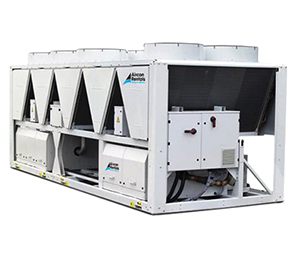
Chiller Hire
Temporary chillers can support dairy chilled-water and glycol systems, production cooling, facility expansion and planned maintenance.
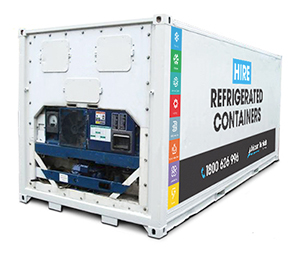
Refrigeration Units
Temporary cool rooms, refrigerated containers and commercial refrigeration equipment can provide additional or replacement storage for dairy products, ingredients and production overflow.
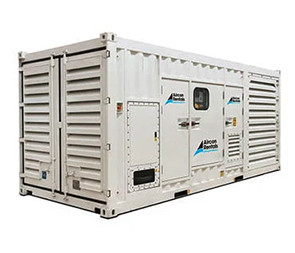
Generator Hire
Temporary generators and electrical distribution can support chillers, pumps, refrigeration equipment and other critical dairy loads where site electrical capacity is unavailable or insufficient.
Why Choose Aircon Rentals for Dairy Cooling and Power Hire?

Nation-wide
24/7 support across Australia for production peaks, planned shutdowns, temporary refrigeration and unexpected equipment failures.

9,000+ Hire Products
Chillers, cool rooms, refrigerated containers, generators, pumps and temporary electrical equipment available nationwide.

Equipment Prepared for Site
Equipment is inspected and tested before dispatch, with pumps, hoses, heat exchangers and power accessories available as required.

Technical Assessment Before Deployment
We assess temperatures, cooling loads, chilled-water or glycol systems, flow, hydraulic requirements, electrical capacity, connection points and site access before recommending equipment.
Need Temporary Cooling, Refrigeration or Power for Your Dairy Facility?
Whether you are increasing production, planning maintenance, commissioning new equipment or responding to an unexpected cooling or refrigeration failure, Aircon Rentals can assess the temporary equipment and supporting infrastructure required.
Real-World Results: Temporary Cooling Projects for Dairy Manufacturing

Emergency Cooling for a Victorian Dairy Processing Facility
Following a refrigeration-system failure, a Victorian dairy processing facility required approximately 1,000 kW of temporary chiller capacity.
Aircon Rentals supplied a temporary system including chillers, pumps, switchboards, hoses and remote monitoring to support the site’s glycol cooling requirements at approximately -5°C.
The temporary cooling system remained in service for around eight months while the permanent refrigeration requirement was addressed.
Read the Emergency Dairy Cooling Case Study
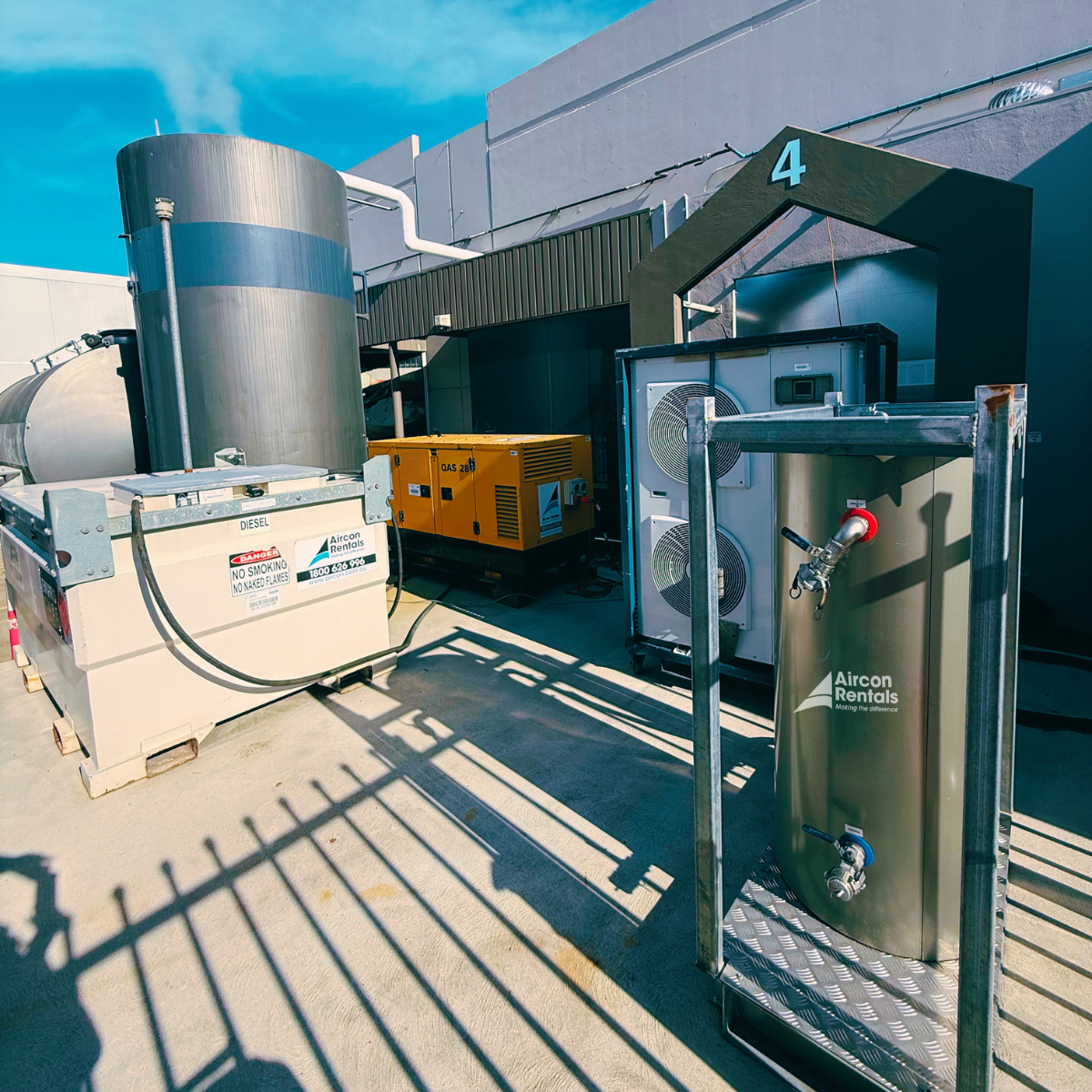
Production-Area Cooling for a Melbourne Yoghurt & Cheese Manufacturer
A Melbourne yoghurt and cheese manufacturer required additional production-area cooling during the warmer summer months, with insufficient spare electrical capacity available onsite.
Aircon Rentals supplied a 21 kW air-cooled chiller, portable fan coil unit and 28 kVA generator, providing both temporary cooling and an independent power source for the system.
The initial requirement was expected to run for approximately three months and was later extended to cover the full summer period.
Read the Melbourne Dairy Manufacturing Case Study
What We Assess Before Recommending Temporary Dairy Cooling
Temporary equipment needs to suit both the required cooling load and the dairy facility’s existing infrastructure.
Process & Hydraulic Requirements
Cooling conditions: required supply and return temperatures, existing chiller or refrigeration capacity, chilled-water or glycol conditions, glycol type and concentration where applicable, and the required cooling load.
Flow and hydraulics: required flow, system pressure, pump head, existing pump arrangement, pipe and connection sizes, and any hydraulic isolation requirements.
Production demand: target cooling or pull-down time, simultaneous production loads and required redundancy.
Temporary integration: available tie-in points and isolation arrangements should be assessed so the temporary system can be integrated with the existing cooling circuit.
Site & Electrical Requirements
Electrical supply: available voltage, phase, electrical capacity and connection method. Where site capacity is insufficient, temporary generation and electrical distribution may be required.
Equipment location and access: proposed equipment position, ambient conditions, hose and cable routes, delivery access and available working space.
Timing and operation: required installation window, start date, expected hire duration and monitoring requirements.
For dairy process applications, fluid compatibility and hygienic separation may also need to be considered.
Depending on the existing system, a temporary installation may require pumps, hoses, adapters and fittings, isolation arrangements, plate heat exchangers, electrical distribution, temporary power and supporting controls.
Where direct connection is not appropriate, a plate heat exchanger or separate temporary circuit may be used to isolate the rental system from existing process infrastructure.
Where cooling is critical to continued production, redundancy requirements should be identified during planning so the temporary system can be configured appropriately.
For more complex temporary systems, Site Assessment & Planning and Design & Engineering can help establish equipment, connection, hydraulic and electrical requirements before deployment.
Be Ready Before Cooling, Refrigeration or Power is Urgently Required
Temporary equipment is easier to deploy when critical requirements across dairy manufacturing operations have already been identified.
Identify Critical Dairy Manufacturing Loads
Determine which systems and processes depend on cooling, refrigeration or power.
Depending on the facility, these may include:
- milk reception and storage
- post-pasteurisation cooling
- yoghurt and cultured-product cooling
- cheese production
- raw-material or finished-product storage
- frozen-product areas
- ageing or hardening rooms
- production and packaging areas
Consider which loads may operate simultaneously during peak production and what would be required to maintain critical manufacturing operations during an equipment failure, outage or planned shutdown.
Plan Temporary Connections & Site Requirements
A contingency plan can also document:
- temporary connection points
- isolation valves and arrangements
- connection sizes
- electrical connection requirements
- temporary equipment locations
- hose and cable routes
- access requirements
Identifying these requirements before a shutdown or breakdown can reduce delays when temporary equipment needs to be mobilised.
Aircon Rentals’ HVAC, Refrigeration & Power Contingency Planning service can help identify temporary equipment, connection and site requirements before they are urgently needed.
Frequently Asked Questions
Why would a dairy manufacturer need temporary cooling?
Temporary cooling may be required when production demand exceeds available capacity or when permanent cooling equipment is unavailable because of maintenance, repair, replacement or plant upgrades.
Temporary equipment can allow critical operations to continue without requiring an immediate permanent cooling-system upgrade.
Can a temporary chiller operate alongside an existing dairy cooling system?
Yes, in many applications. A temporary chiller can operate alongside permanent plant where the hydraulic arrangement, required temperatures, flow, connection points and electrical supply support parallel operation.
The existing system should be assessed before equipment is selected.
Can temporary chillers connect to existing chilled-water or glycol systems?
Yes, in many applications. The existing system should first be assessed for required temperatures, fluid type, glycol concentration where applicable, flow, system pressure, available connections and electrical supply.
Where direct connection is not appropriate, a plate heat exchanger or separate temporary circuit may provide another option.
Can temporary cooling support dairy processing equipment?
Yes, depending on the process and system configuration.
Temporary chillers can provide additional chilled-water or glycol capacity to the utility side of production equipment where the required temperature, load and flow have been established.
The dairy manufacturer remains responsible for maintaining the required production, quality and food-safety conditions for its products.
What size chiller does a dairy facility need?
Chiller capacity depends on the actual cooling requirement rather than building floor area alone.
Important factors include:
- required supply and return temperatures
- flow
- system pressure and pump requirements
- process load
- production throughput
- simultaneous cooling demand
- required pull-down time
- existing plant capacity
- ambient conditions
- available electrical supply
- required redundancy
Aircon Rentals can assess these requirements before recommending temporary equipment.
What equipment may be required in addition to a temporary chiller?
Depending on the existing dairy cooling system, a temporary installation may also require pumps, hoses, adapters, plate heat exchangers, electrical distribution or temporary power.
The required equipment depends on the existing plant, fluid conditions, connections, flow requirements and electrical supply.
Can you support planned dairy plant shutdowns and equipment upgrades?
Yes. Temporary cooling, refrigeration and power can support critical operations while permanent chillers, pumps, heat exchangers, refrigeration equipment or electrical infrastructure are serviced, repaired, replaced or upgraded.
Planning the temporary installation before the shutdown helps identify connection, equipment-position, hydraulic, electrical and access requirements in advance.
Can Aircon Rentals provide temporary power for dairy cooling and refrigeration equipment?
Yes, temporary generators and electrical distribution can support chillers, pumps and refrigeration systems where existing site electrical capacity is unavailable or insufficient.
Cooling and electrical requirements should be assessed together when configuring the temporary system.